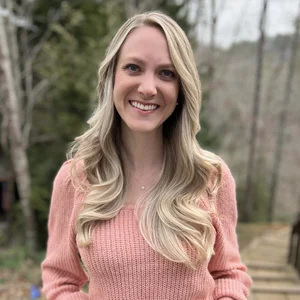
When “Christian” Birth Advice Isn’t Biblical: Spotting False Teaching in Pregnancy and Birth with Dannette McGrew

Have you ever come across a birth affirmation, a birth course, or a piece of pregnancy advice that just felt... off? Like something wasn't quite sitting right in your spirit, but you couldn't put your finger on why? You are not alone — and this conversation is for you.
In this episode, I sit down with Dannette McGrew, a certified doula, childbirth educator, and passionate apologist, to talk about something that doesn't get discussed nearly enough in the Christian birth world: false teaching. Not the obvious stuff — but the subtle, sneaky worldviews that have quietly crept into birth spaces, even among people calling themselves Christian birth professionals. This conversation is going to sharpen your discernment and anchor your heart in truth.
🎧 Listen to the Episode
Meet Dannette McGrew
Dannette McGrew is a certified doula and childbirth educator with a deeply unique background. She grew up in an isolated religious community, worked as an EMT, and came to saving faith later in life after what she describes as completely disentangling and rebuilding her faith from the ground up. That journey — combined with her love for apologetics and theology — has made her one of the most discerning voices I've come across in the Christian birth space.
Dannette had her first baby at a freestanding birth center and, like many of us, stumbled into the birth world almost by accident. But it didn't take long for her to notice something troubling: a lot of the birth content out there — even content marketed to Christian mamas — wasn't actually biblical. And she's been doing the hard work of examining it ever since.
The Birth World Has a False Teaching Problem
Here's the thing — when most of us think about false teaching in the birth world, we think about the obvious stuff. Crystals. Placenta rituals. Outright occultism. And yes, all of that exists. But Dannette makes a really important point: that's not the biggest threat.
The more dangerous teachings are the ones that sound Christian. They use biblical language. They reference God. They quote scripture. But underneath the surface, they're carrying a completely different worldview.
As Dannette puts it, it's a lot like using the same words with completely different meanings — and if you're not grounded in the Word yourself, it's incredibly easy to miss.
"God Designed Your Body Perfectly" — But Did He?
One of the most common phrases you'll hear in the Christian birth world is some version of: God designed your body perfectly. You were made without flaw. Your body knows exactly what to do.
And on the surface, that sounds beautiful and faith-filled, right? But Dannette gently and wisely points out what's missing from that statement: sin.
Yes, God designed our bodies beautifully. Yes, we are fearfully and wonderfully made. But we also live in a broken, fallen world. Sin has affected everything — including our bodies. That's why some pregnancies end in loss. That's why some births require intervention. That's why some babies arrive early and spend time in the NICU.
To teach that your body is perfectly designed and will always function as intended — without acknowledging the reality of sin and its effects on the physical world — is not a complete or biblical picture. And it sets mamas up for tremendous guilt and shame when things don't go as planned.
There are actually multiple biblical reasons why our bodies may not work exactly as we hope: the effects of our own choices, the effects of others' sin, the general brokenness of the fallen world, and sometimes even spiritual attack (think of Job). We need a theology of the body that makes room for all of that.
The Problem with Most Birth Affirmations
This is something that's really close to my heart, and it's actually part of why I created the Christian Birth Affirmation Cards. Because when I looked at what was out there — even in Christian birth spaces — I kept seeing the same kinds of affirmations:
I am enough. I am strong. My body will birth perfectly. I am going to have the birth I desire.
And here's the problem Dannette identifies so clearly: if you're affirming something that may not be true, you are speaking lies over yourself. And when those affirmations don't "work" — when your birth doesn't go the way you declared it would — you're left feeling like it was your fault. Like you just didn't believe hard enough. Like your mindset failed you.
That is a crushing weight that no mama should have to carry. And it is the opposite of the gospel.
The gospel doesn't point us back to ourselves as the source of everything. It points us to God. That's exactly what true biblical affirmations should do — not pump us up with things that may or may not be true, but anchor us in the unchanging character and promises of God.
What About Christian Hypnobirthing?
This is a topic I've been wrestling with for a while, and I was so grateful to think through it with Dannette. Because here's the thing — I understand the appeal. Hypnobirthing promises a calmer, more peaceful birth experience, and when someone slaps a "Christian" label on it and swaps in some scripture, it can seem like a totally reasonable tool.
But Dannette raises a really important question: where does the power come from?
When it comes to evaluating any wellness or birth practice as a Christian, she offers this really helpful framework: a practice is only safe to engage with if its power derives solely from physical properties that God designed in the world. The moment a practice draws its power from a supernatural or spiritual source — regardless of what label is on it — we cannot redeem it or Christianize it.
And from everything Dannette has heard from people with backgrounds in the new age and in hypnosis practice, hypnosis is fundamentally a spiritual practice. It is designed to bypass your critical thinking and make you more suggestible. It opens spiritual doors. And that, friend, is not something we can just rename and use for Jesus.
It's also worth asking: even if a practice "works," what is the outcome pointing toward? Is it drawing you closer to God and building your trust in Him? Or is it building your confidence in your own ability to control your birth experience?
Prosperity Gospel in the Birth World
This one really surprised me when Dannette brought it up — because I hadn't quite connected the dots this way before. But she's right: prosperity gospel thinking has absolutely made its way into Christian birth content.
It shows up in the declarative prayer trend — the idea that you can claim a pain-free birth, declare a healthy pregnancy, speak a specific outcome into existence. And the scriptures being used to support this? Dannette noticed they are almost identical to the scriptures used by false faith healers on television. The same verses. The same logic. Just applied to birth.
The core problem is the same as it always is with prosperity gospel: it treats God like a vending machine. It implies that if you pray the right way, use the right words, and claim the right promises, He is obligated to give you what you want. And when He doesn't — when the birth is hard, when there's a complication, when the baby comes early — you're left wondering what you did wrong.
That is not the God of the Bible. That is not the gospel.
The Danger of Chasing Outcomes (Even Good Ones)
One of my favorite parts of this conversation was when Dannette started talking about physiological birth as a potential idol. Because I think this is something a lot of us in the natural birth world — myself included — have had to wrestle with.
There's nothing wrong with wanting a physiological birth. There's nothing wrong with eating well, preparing your body, hiring a doula, or choosing a birth center. Stewardship of our bodies is genuinely good and honoring to God.
But when physiological birth becomes the goal — the thing your hope is riding on, the thing that determines whether your birth "counts" as a success — we've made it an idol. And Dannette shares from her own experience with chronic eczema how she had to ask herself: what am I doing all of this for? Is it so I never have to experience pain again? Is it so I can feel like I've arrived?
We have forgotten the value of suffering. We have forgotten that God is far more interested in our holiness than our comfort. And sometimes — as we both know personally — it is the hard, unexpected, unplanned birth experience that draws us closest to Him.
My Personal Testimony: Isaac's Birth
I want to share something personal here, because it speaks directly to everything Dannette and I talked about in this episode.
Before Isaac's birth, the Lord was very clearly prompting me to pray — not for specific outcomes, but for three things: that I would come to know Him more, that I would trust Him more, and that I would experience His joy more.
And then Isaac came seven weeks early. He spent time in the NICU. Nothing went the way I had planned or hoped. And yet — I experienced more of the Lord's love, more deep trust, and more genuine joy in that experience than I have in any of my other births.
That is only possible when your hope is not anchored to an outcome. That is only possible when your identity and your peace are rooted in Christ — not in the birth you planned.
How to Grow in Discernment as a Christian Mama
So what does a mama do with all of this? Dannette offers some really practical wisdom:
1. Be plugged into a biblical church. Don't underestimate the value of real relationships with older, wiser women in your local church. Bring the content you're consuming to them. Ask them if anything raises a red flag. Having people outside of the online birth world speak into what you're reading and watching is incredibly valuable.
2. Be in the Word consistently. Discernment is a discipline, just like physical training. You can't study the Bible once and be done. You have to keep coming back — reading, studying, listening, praying. And the goal isn't just information. It's transformation. The more deeply you know the real thing, the more quickly you'll recognize a counterfeit.
Dannette uses this beautiful analogy: people who are trained to spot counterfeit bills don't study counterfeits — they spend months studying only the real thing. And then when a counterfeit crosses their hands, they know it immediately. That's what consistent time in scripture does for us.
3. Get multiple perspectives and exercise your own discernment. Even teachers and organizations you trust will be wrong about something at some point. That's not a reason to distrust everyone — it's a reason to keep testing everything against scripture yourself. It's okay to disagree with people you respect. That muscle needs to be exercised.
And I'll add this from my own heart: that goes for this podcast too. I love the Lord and I'm doing my best to follow Him faithfully — but I am not infallible. Test everything you hear here against the Word as well.
📖A Scripture to Anchor You
"Delight yourself in the Lord, and He will give you the desires of your heart." — Psalm 37:4
This verse gets twisted so often into a prosperity gospel promise — as if God is a genie who will grant our wishes if we just love Him enough. But as Dannette beautifully explains, what this verse is really saying is that when we truly delight in Him, He becomes the desire of our heart. He gives us Himself. And in Him, we are fully and perfectly satisfied — no matter how our birth unfolds.
🙏 A Prayer for You on Your Journey
Lord, thank You for the gift of Your Word and the Holy Spirit who leads us into all truth. Give us wisdom and discernment in this season. Help us to recognize when something sounds good but isn't rooted in the gospel. Protect us from teachings that point us back to ourselves instead of to You. And when our birth experiences are hard or unexpected or not what we planned, would You meet us there — deepening our trust, our love, and our joy in You. We surrender our outcomes to You, knowing that You are good and You are with us. Amen.
📎Resources & Links Mentioned
✨ Christian Mama Birth Prep Library - Free birth prep tools, worship playlists & more
💕 Work with Me 1:1 – Virtual Doula Support & Schedule a Private Coaching Call
✝️ Online Christian Childbirth Education - Explore my complete birth preparation self-paced course
🎴 NEW Christian Birth Affirmation Cards - You can now purchase them here
📖 Walking with God through Pain and Suffering by Tim Keller - Mentioned as a beautiful resource for mamas walking through hard seasons in pregnancy and birth.
📣 Let’s Stay Connected
If this episode encouraged you:
Hit subscribe and leave a review on Apple Podcasts or Spotify.
Text a friend and share the show with a fellow mama.
Grab your free birth prep tools at the Christian Mama Birth Prep Library.

Meet Your Host —
Natalie is a certified birth doula and childbirth educator in Jacksonville, FL. She's trained through DONA International, certified as a Body Ready Method Pro, and an advanced VBAC doula. Through Faith Over Fear Birth, she equips Christian women to experience peaceful, faith-filled births through both virtual and in-person support.
🔗 More You Might Love
📄 Full Episode Transcript
Natalie: Today I am so excited to introduce you to my guest, Danette McGrew. Danette is a certified doula and childbirth educator, a wife and mama of two little ones. One thing I love about Danette is that she is deeply passionate about apologetics and biblical discernment, and she’s been doing some really important work digging into the worldviews that have quietly crept into the birth world, even through people calling themselves Christian birth professionals. This is a conversation that is so timely and needed for all believers. Danette, welcome to the show. So excited to have you.
Danette: Thank you. I’m so excited to be here.
Natalie: I mentioned offline, like, this really is a conversation I’ve been wanting to dig into, so I’m really excited to have you here to discuss. Before we get more into the interview, I would love for you to just share a little bit more about yourself, your family, and also how you got into birth work.
Danette: Yeah, so I grew up on a little farm, basically, in kind of a different sort of Christian community, and so there’s a whole backstory there that we’ll probably go into a little bit more. It was a very rural area, so raising animals and kind of isolated from the general world. I had no idea that midwifery care still existed. I thought it was like the thing they did in the 1700s, you know? And then in my twenties I moved out of that little town and met my, who is now my husband. At the time I was an EMT, so I was working full-time as an EMT and going to school to be a vet tech. The Lord just grabbed a hold of me, saved me out of all of the craziness that was going on in my own head. We had a whole journey ourselves, just moving across the country and starting a new life in Oklahoma.
Then when I got pregnant with my first in 2022, so very shortly after COVID, I had kind of left the whole EMS world behind at that point. I had burned out really bad, just because of all the trauma that exists in small town, rural EMS. So I had left all the medical things behind, but suddenly found myself pregnant. I quickly realized that the hospital was not gonna be a place of comfort for me, and so I started looking outside of that and came across this crazy thing called a freestanding birth center. To me it was the wildest thing I’d never heard of, but it sounded really interesting to me as well. I had become quite a bit of a questioner of all things, you know, just a questioner of the norms. I stopped just doing things because that’s the way they were always done.
So that kind of led me into having my first baby at a freestanding birth center with midwives. It was a crazy experience. I did not get the empowering, wonderful, proud feeling afterward that everybody talked about, and so I was kind of left going, did I do that right? After she was born, I came across the Biblical Birth School on my Instagram, and I was like, wow, there are Christians who do this. This is amazing. Because I had encountered all of the new age things — Christian hypnobirthing was offered to me, and it just felt weird and I didn’t do it. But when I saw a Christian doula who was like, you don’t have to do it this way, you can do this in a way that glorifies God, I was like, this is very interesting to me. So I signed up for her program and became a certified doula and childbirth educator. It felt like it was right up my alley because I’ve loved medicine since I was a teenager and began working as an EMT. I love educating people. I was always doing CPR trainings and training other EMTs, and it’s just something I love to do. So it was really great to be able to combine several of my passions — and the other thing I was able to pull in was my love for apologetics and theology and apply that as well. It was so exciting for me to have found something where I could really combine everything I’m so passionate about and just run with it.
Natalie: I think before you become pregnant, you are not even aware of this whole world that is the birth world. And so it’s so fascinating that you felt so disconnected to the point that even hearing about a freestanding birth center was just the most bizarre thing to you. But we all have to ease into that. Unless you’re surrounded by it, it is a little bit different, especially when, I don’t know, 90-something percent of women are giving birth in hospitals. So yeah, it is a little bit fringe still at this point for a lot of women to have a different birth experience.
But I did want to touch a little bit more on what you were sharing about having a crisis of faith. If you could take us back to that season and what the Lord was doing in your heart during that time?
Danette: Yeah, so the group I grew up in was started by someone who said that they were a prophet, and so I was raised in a very isolated group where we believed essentially that we were the real Christians and everybody else didn’t have this special revelation that we had.
It’s very hard to describe the worldview that comes out of it because it affects everything that you believe. But through going to a little local church, I started realizing that there are other people outside of where I grew up that are true believers. Like, these people are reading the Bible and studying it in a way that I’ve never seen modeled, and I was like, man, this is really interesting.
During that time I would say that I was not saved. My general worldview was that I was probably sure I was going to heaven because I was basically a good person. I was trying really hard. I tried to do the right things, I tried to be kind to people, but I also basically believed in karma. I basically believed that what goes around comes around and eventually justice would happen on this earth. So I would say that I had basically what they call therapeutic deism — I believed in God, I did not have a good understanding of the gospel, and I believed I was going to heaven because I was basically a good person.
So I was going to a couple of different little churches at the time. During that time I also met my husband, who was a believer, and the way I was talking, he thought I was a believer as well. But we were just using the same terms with a completely different meaning. We ended up moving to Oklahoma, where I went to a little local church. I will never forget the pastor getting up on stage the first Sunday and saying, “Do not believe anything I say just because I’m standing on a stage with a microphone. Check everything I’m saying against the word of God.” And I was completely floored. I’d never heard someone admit to not having the authority, because the way I grew up, it was, “These are the people who have the authority because they can hear from God in a special way that I can’t.”
So that pastor was really instrumental. God used that church and that pastor in a great way in both mine and my husband’s life. He was very interested in apologetics. He had been an atheist at one point in his life as well. So I went through a huge time of just completely reforming my faith from the ground up. I kind of say I had to — I don’t know if you’re familiar with Jinger Duggar, she has a term that she uses, “disentangling her faith,” and I really like that. I feel like that’s what I did as well. Go back to the bare bones of, okay, I believe there’s a God, but why? Okay, then what’s the next step? If there is a God, how do I know who He is? How do I know what He has and hasn’t said? How do I know I can trust the Bible as an accurate representation of who He is and what He said?
So I had to go back to bare bones and build it from the ground up. By God’s grace, during that time I had several jobs in a row where I was able to listen to podcasts all day. I started out listening to a huge variety — faith-based, non-faith-based, progressive Christianity type of leaders. I started noticing the differences. People would say some things and I would be like, okay, but that actually directly contradicts what the Bible says. I was like, people can do that? Like they can say they’re Christian and then believe the opposite of what’s in scripture? That was just an eye-opening moment of what discernment is and why it’s needed, and so that kind of kicked off my journey of trying to understand how I can test teachings against the standard of scripture.
At one point I was listening to R.C. Sproul’s book The Holiness of God, and that was a pivotal moment — really coming to an understanding of what the gospel is and the reason why I’m getting to heaven. And it’s not because I’m basically a good person.
Natalie: I grew up in a Southern Baptist church and I had a very strong performance-based idea of why I’m saved — because of my performance. Even though I don’t think I would have ever said that. I would have had the right words to say, but in my heart there was this sense of, I am accepted because of what I have done, and it really wasn’t about what Jesus had done for me. And so I think that is such an important difference. The good news is not that you can do better, try harder to be accepted by God. That is not the gospel — that is crushing, and it’s the antithesis of the gospel. The gospel really is that Jesus Christ lived the perfect life that you couldn’t live, died the death that you should have died, and is your righteousness. Such a powerful difference.
So Danette, how did having your faith rebuilt from the ground up shape the way that you approached your work as a doula and as a birth worker in general?
Danette: Yeah, so I would say that I am just a skeptic of everything I see. And obviously not all the time, because I think all of us have areas where we are susceptible to certain things — like we already believe something, and so when we hear somebody say it, we have that confirmation bias. So I’m not by any means saying that I’m impervious to bad teaching. But I do look at everything with a critical eye, and just because I’ve listened to so many different perspectives, I can kind of see where they’re going based on the words they’re using. I can kind of see, like, if you’re using this terminology, that’s coming from this worldview. So I definitely came into it with a critical eye, already looking for false teaching, just because that’s what I look for all the time. And I definitely see it everywhere.
Natalie: I also wanted to have you touch on some very specific examples of new age, prosperity gospel, or other things in the birth world, so that the mama listening can maybe identify some of these things in her own life that are contradictory to the gospel and the Bible.
Danette: Yeah, and honestly I was surprised myself when I started looking into all of the different birth programs that are out there, the really popular Instagram accounts. I was surprised at what I was seeing because what I expected to see was outright occultism — and there is all of that — but that is not the biggest threat. A lot of Christians have enough discernment to say we probably shouldn’t be doing spells with our placenta. We probably shouldn’t be using crystals as if they have spiritual healing properties.
The more insidious teachings, I think, are from the people who use the same language, who use biblical terminology but mean it in a different way. So what I’ve been seeing — the majority of the bad teaching — is using Christian terms but saying things like, “God designed your body perfectly. You’ve been designed without flaw.” But they forget to tag on that sin brought in the flaws. So their whole teaching is based on the idea that a woman’s body is designed to give birth perfectly, which in a sense is true — God did design us beautifully, we are fearfully and wonderfully made, and most of the time it works. But like everything else in our life, sometimes we get sick, sometimes the body doesn’t work the way it should.
The more I thought about it, the more I was like, it’s strange that we have this view on birth, but we recognize that some people are born with genetic conditions, some people are more prone to sicknesses, and so on. God did design our bodies in a beautiful, wonderful way. I absolutely love studying the physiology of birth. I think it’s a beautiful design, and I don’t take the stance that birth is inherently dangerous or that God’s design is fatally flawed. I do believe that God made us with a beautiful, wonderful design. But I also recognize the effects of sin.
I was listening to a podcast where someone talked about a doctor she saw who gave her a really good way to view this, which is that things that go wrong in your body can have a variety of causes. She looked at all the different places biblically where people got sick or their body failed in some way. Sometimes it’s the result of your own sin — if your whole life you do not take care of your body, things are gonna go wrong. It could also be the result of someone else’s sin. It also could just be the result of the general effect of sin on the world — things are broken, things are dying, things are not the way they were designed to be in the beginning. And other times it could be the result of actual spiritual attack — in the Bible, Satan was able to attack Job’s body for spiritual reasons. So there’s a lot of things that can cause your body to not perform the way it was intended to perform.
I think we need a balanced view of looking at our own bodies and understanding that they were designed really well, and we should do everything we can to support and steward them well. But we also have to understand that things can go wrong sometimes, and God is sovereign over that.
Natalie: That is so crucial, that distinction. And I think that’s also why I’m so intentional, when I’m working with clients and on this podcast, to have this language of, we are simply stewards of what the Lord has given us, but I cannot manifest or will something outside of God’s will. That includes how my pregnancy goes, whether or not I’m even able to get pregnant, how that birth unfolds, how that child’s life unfolds. Like all of those things. There are certainly ways you can make that soil, so to speak, fertile for good things to grow and steward it in that way. But you cannot make something grow perfectly the way that you want, because we are living in a sinful, broken world. And so many of us are touched by that on different levels. It just shows up in different ways.
I think that’s a beautiful distinction to make. And you’re right — I think that’s also what drove me to make a set of Christian birth affirmations. I was really sick of hearing these anti-gospel generic phrases about affirming yourself in birth, because if it’s not true, then you’re just speaking lies over yourself. Why would you speak lies over yourself? Being able to frame your birth in truth, and wrestling through feelings of, I am inadequate, my body might fail me — instead of having this untrue, toxic positivity of, my body’s made perfectly and I’m a believer so God owes me a smooth birth. Absolutely not. He does not owe us anything. Being able to separate that is so important as you think through your birth experience.
Danette: And that something you said reminded me of another big red flag I see even in Christian courses — they have a fundamental view of the self as the source for everything. This shows up a lot in what you’re talking about with the affirmations. There are all these birth affirmations — “I am enough, I am beautiful, I am wonderful, I am going to have a great birth.” And I think affirming things is fine as long as you’re affirming something that is true. But it never made sense to me to tell yourself something that you know may or may not happen. I was like, how is this gonna work for me if I know I’m lying to myself? How can I convince myself when I’m the one saying it and I know that I’m lying?
And then the problem is that when it doesn’t work, you are the one who gets blamed. You are responsible to have the right mindset, and if your birth doesn’t go the way you want, then it’s your fault — you just didn’t say the right things, you didn’t affirm the right things, you didn’t have the right mindset. It’s all put on you, which is a massive weight. And like you said, it’s a weight that Christians should not have to bear. So I’m all for affirming scriptural truths, but it should not be pointing back to ourselves as the source of everything. It should be pointing us back to God as the source of everything.
Natalie: Absolutely. And I think that’s also why I have really struggled as a believer to get on board with Christian hypnobirthing. I had an interview with Kayla Borgela, who has been my doula client in person twice. Her first ended up being a very long labor and a C-section. And then as she was preparing for her second birth and planning a VBAC, she came across Christian hypnobirthing and shared that it seemed too much like a manifestation mindset — just telling yourself enough that you’re gonna have a certain type of experience and then you’ll have it. And that is just not how it works.
The more I’ve thought about it, the more I’m like, yeah, I don’t even see the merit in hypnobirthing even with the label “Christian” and using Christian terms or words. Because I think again, it goes back to the fact that we are not in control. Not in a scary way — not in a “God is a madman looking to get you” kind of way. He is a good Father and He loves us, but He loves us and allows us to walk through hard things. Not because it brings Him pleasure, but because it draws us nearer to Him. And so yeah, the more I get into this birth space and the more I think about hypnobirthing — and Christian hypnobirthing specifically, for Christians — the more I’m like, I think we’re definitely missing the mark here. I think we’re making it too much about outcomes, when that is not what all of life is about, and certainly not our birth experiences.
Danette: I think there are a couple of things with hypnobirthing. One is that hypnosis itself is a whole thing in itself, and as Christians we can’t just take something and slap a Christian label on it and say we can do it now. We have to be really intentional about the source of why it’s working.
The more I’ve listened to and talked to people who have been in the new age and who have practiced hypnosis, I’ve heard the same thing from all of them — that it is primarily a spiritual practice, and it’s designed to take away your critical thinking. Essentially, it’s designed to make you more suggestible. People have opened themselves up unintentionally to spiritual forces, and as a Christian that should be an automatic red flag.
So we can’t look at hypnosis and say we shouldn’t do it because it’s not effective — it is effective. There are a lot of people who have had great success with hypnobirthing. But we have to think deeper than that. We can’t just say, because it works, we’re gonna turn it Christian and make it work for us.
I heard somebody talk about how we can decide as Christians if we can redeem a practice — and this kind of applies to a lot of wellness practices in general. They said you have to be able to determine that this practice works based solely on physical properties that God designed in the world. If this thing derived any power at all from a supernatural source, we cannot touch it. We cannot redeem it. We cannot engage with it, because God has said, for our good, do not mess with these things. Do not open spiritual doors that you should not be opening. It’s for our own good — He’s protecting us from something that actually is real. He’s trying to protect us from real threats, real dangers. And so those things, if they derive any power at all from a supernatural or spiritual source — don’t touch it, don’t mess with it. And I do believe that hypnosis falls in that category.
Before we jump back in — if you’re listening to this conversation and thinking, “Okay, but how does this apply to my situation?” that’s exactly what virtual birth support is for. We take everything you’re learning from episodes like this one and work through what it looks like specifically for you. You can learn more at faithoverfearbirth.com or visit the link in the show notes. Now back to the conversation.
Natalie: Another thing that I feel like is important when you’re discerning these things is not only where is the power coming from — is it spiritual or just elemental — but who’s receiving the glory for this? Who is being attributed this healing? Is it the Lord or is it something else? And I mean, that’s true with anything, not just healing things. But again, what is the point of this birth experience going beautifully? Is it for self-glory? Is it so that you can tell yourself, I’m so strong, I did it? Or is it to be hard on yourself that you didn’t do it the way you were supposed to? If at the end of the day you come away from it either puffing yourself up or deflating yourself because of the experience, then you really have to ask, what was I doing all of this for? Was it really for the Lord, or was it for myself in some beautifully worded way?
We can deceive ourselves so much. And not to say God can’t redeem that, because I think in some ways the Lord has even redeemed my first birth experience — He really met me there, and there was so much positive. But there was a lot of pride from that experience as well. There were times where quietly in my heart I was like, oh man, I’m just so good at giving birth, that was just easy, I’m just so strong. And it’s not negative to think those things about yourself, but if it eclipses the Lord’s glory and the weight of who He is and the beauty of what He’s done in your life — not what you manifested — I feel like that’s a really big difference in how you frame that experience.
Danette: I love what you were saying about chasing outcomes. I think that’s another thing I see a lot in the Christian birth world — we are really focused, especially probably just as a cultural thing, on physiological birth right now. I’ve seen it almost put on a pedestal, like this is the highest goal, this is what we’re looking for, this is the best type of birth. And then if you can do a natural birth in the hospital, that’s good too. But if you can do a physiological birth at home, well, you’ve really arrived.
I think that is such a danger, especially with just the direction that health and wellness is going right now, and it’s such a danger specifically to Christians because we want to honor God with our bodies and trust Him with them and give Him glory for the beautiful design He’s made. But even wellness culture itself has started to become an idol. I started noticing it in myself first.
I have had eczema since my first was born — like a couple of months after she was born it flared up and it has not gone away since. So I’ve had it for almost three years now. And because I had stepped into the natural birth world, I was already on the wellness train. I’m starting to eat cleaner, getting rid of more processed foods — which I’m not saying by any means is a bad thing. But you can’t chase the outcome. If my whole goal was to get rid of the eczema, or if my whole goal is to have a physiological birth without any interventions, you’re already chasing the wrong thing. Because if you don’t get that thing, you’ve lost your hope and you feel like a failure.
I had to realize that my goal can’t be pain-free birth or physiological birth or getting rid of my eczema. I started asking, what am I doing all of this for? I’m making all these changes in my life and working out — what is it all for? Do I just want to never experience pain again and live forever? As Christians, that’s not what we should be chasing. We should be doing everything to the glory of God. If you are being healthy and doing all these things so that you can steward your body, that is one thing. But we have to be really careful about what in our minds the goal is. What is the main outcome? Why am I doing this? Is it for my own comfort? Is it so I can avoid experiencing anything uncomfortable?
I think we have forgotten the value of suffering in our culture. We’ve forgotten that pain-free birth or physiological birth is not the ultimate good. There is good that can happen through really hard things and really tough things, and sometimes the change in your spirit and your relationship with the Lord that occurs during those hard times is so much more impactful and deep than something you would experience if you had no hardship and no pain.
Natalie: Yeah, I could not agree more. There’s a beautiful book — I don’t know if you’re a Tim Keller fan, but he wrote a book on pain and suffering called Walking with God through Pain and Suffering. I started listening to it when my son was in the NICU, just as a way to keep that hard season focused on the Lord and just knowing that He is walking me through it. If you are walking through a season like that — or even if you’re not — it’s such a beautiful book. It looks at scripture and reframes why the Lord allows pain and suffering, and it’s proven all throughout scripture that He does.
A phrase you may have heard in Christian circles is, “You’re never safer than in the will of God.” And that sounds so good, but it is not biblical. Jesus was perfectly in the center of God’s will and He was led to a cross to be tortured and killed. That is not a safe place to be. The Lord is not solely interested in your safety and your comfort. He is so much more interested in your holiness and you being in right relationship with Him. That is way more important to Him, and so He will allow pain and suffering in your life so that you can get to that true end, and not just simply feel comfortable and feel safe.
I read this really interesting post a few years ago, and it was like, whether through meditation or medication, we try to avoid pain. And when you think about it in the birth perspective, that really is true. Whether you’re trying to do all of the natural routes or the medication route, we really do try to avoid pain. Not that we should be seeking pain, not that we should be adding pain as if it’s some sort of masochistic thing. But truly trying to avoid all pain is not a biblical goal. Which is really challenging, especially in our American culture, where that is constantly preached. And like you’re saying, even in the health and wellness space — everything is meant to provide us more comfort. All of us have to do that inventory in our own hearts to discern which way we’re leaning.
Danette: Another one is just the influence of the prosperity gospel on birth right now. I’m seeing it mostly in people who are doing declarative-type prayers. Again, it’s this idea that we should not have to experience any pain and suffering in this world, and that we can declare the promises. They’re using Christian language, using the promises of scripture, but they’re twisting them out of their original context and meaning.
I was so surprised — and not surprised — when I started reading further into these people who are claiming the promises of scripture, and I saw that they are using all of the exact same phrases and scriptures from the Bible as the false faith healers you see on TV. That whole vein of claiming the promises of God — they over and over again say, “By His stripes we are healed, therefore you can claim your healing tonight.” They use all of the same scriptures to claim that you can have a pain-free birth or a healthy pregnancy — all of these things. And there’s nothing new under the sun.
To me the biggest thing you’ve got to do is be in the scriptures. As a Christian you have to understand them for yourself. You have to know how to interpret them for yourself so that you can spot when people are twisting them out of their original meaning. But I see it a lot with the declarative prayers as well, where people are saying you can declare Psalm 91 over your children and it’s talking about health and safety. And again, God is not interested in our physical safety — Jesus was killed on a cross. He’s interested in our holiness, our sanctification, and bringing us back to Himself.
Natalie: I remember reading Supernatural Childbirth. I remember having a pit in my stomach because I was like, this is heresy. This is not truth. It was very upsetting because it was using scripture to justify something that is not at all the gospel. It reminded me of when Satan uses scripture — when he leads Jesus into the wilderness and says, “Throw yourself off this cliff and the angels will rescue you.” We also have to be aware of the way that our own hearts want to just hear what our itching ears want to hear, instead of being challenged by the truth of what the scriptures say. And that takes so much humility. It takes a lot of time and discernment, like what you’ve been talking about — really digging into this, really getting to the root of it. It’s not easy to do, especially for the things that are counter-cultural, that the culture just accepts as perfectly normal. But as believers we have to say, I cannot accept this. I cannot go with the flow on this, even if other believers are.
Just wanting to seek the Lord by actually getting to know Him in the scripture — that’s a discipline I feel like I’ve really only done within the last handful of years, going through the Bible verse by verse and understanding the context, who it was written to, what these scriptures actually meant in the context in which they were written. Instead of just, “Through Christ I can do all things,” okay — and then football teams use that to win a football game. That is not what that verse is about. And again, we’re all prone to that, especially depending on your upbringing. America has a very broad category of Christianity, and it can be really tricky depending on the denomination and all those things.
So if a mama listening wants to be more discerning about the birth content or the support she’s receiving in this season, where is a good place for her to start?
Danette: So I think there are a few essentials. Number one, I really think it’s so important to be plugged into a biblical church. Do not underestimate the value of taking a post to an older woman in your church and saying, “What do you think about this? Does this raise any red flags for you?” Because sometimes, especially as a younger generation, we’re on the internet a lot and we just get used to the language and the things that we’re seeing. Sometimes bringing it to someone who’s outside of that can really shed some light on it and give a fresh perspective. So being a part of a biblical church is so important — because of the relationships you have with people, and also just because you need to be in the word. You need to be part of a church that is teaching the word biblically and faithfully week after week, modeling for you how to approach scripture, how to pull it apart, understand its meaning, and then know how to apply it to your life.
I like that you used the word “discipline,” because the discipline of understanding scripture really is a discipline. It’s a lot like training your body. You can’t train your biceps one time and then say your biceps are good for the rest of your life. It just doesn’t work that way. It’s the same with scripture — you study your Bible, and then you come back to that book a few years later and you’re like, oh, I forgot about this part. And then you remember that it references this other book of the Bible, and then you’re like, but how do those two things fit together? And then you can dive deeper into it. It’s not a one-and-done thing. You can’t just say, I read my Bible and now I understand. It’s a discipline and you have to be in the word consistently. And as moms, sometimes it’s really hard to find the time — but even if it’s just listening to faithful preachers, listening to scripture being read as you go about your day, just thinking about it, praying about it. Think of it like your spiritual food. You’re feeding your soul.
And they always say in apologetics that when people are training to spot counterfeit bills, they do not touch a counterfeit bill for an incredibly long amount of time. They only handle real money for months and months, and they study everything about the real money. Then when a counterfeit bill comes across their hands, they know it in seconds. They don’t even have to know anything about the counterfeit — they just know it’s not the real thing. That’s what’s so important about knowing scripture and knowing theology and knowing the principles of the Bible. If we know the truth inside and out, when we see something that’s even just twisted a little bit, we’re automatically going to recognize it and know that it’s not the truth.
Natalie: Yeah, that’s a beautiful way to think about it. One way I have dove into this discipline of studying scripture is through different Bible in a Year plans. I’ve read the Bible in a year a handful of times now. The one I’m doing this year is The Bible Recap with Tara-Leigh Cobble, and that’s a fantastic one to start. So say you’re listening to this and feeling really convicted that you are not studying scripture like you should — or you know the Lord is calling you to it — that is a great place to start.
It’s a very simple resource, but there’s so much depth in even the very dry genealogies and laws that the Israelites got. As hard as it is to wrap your heart and mind around those things at times, every single word is God-breathed in scripture. It is meaningful and purposeful and serves the greater meta-narrative. Having the ability to have someone help guide you through that and fan the flame of love for God’s word is beautiful.
I love that analogy of the counterfeit money because it’s so true — when you know the real thing inside and out, when you encounter something that is not that, you become more proficient at spotting it. It’s just a beautiful way to live your life and to experience the Lord — having true life and having it abundantly, instead of scrambling to patch together a version of a beautiful life for yourself. And then realizing, what have I built? This is so self-serving. But the life that the Lord prescribes, the way He has built us and designed us, is to experience Him and to love Him and enjoy Him forever and ever. I think that’s just such a beautiful hope that we get to cling to as believers.
Danette: Yeah, that reminds me of the scripture that says, “Delight yourself in the Lord and He will give you the desires of your heart.” A lot of people like to twist that one as if God is like a genie in a bottle — if we pray just right or do all the right things, then He’ll give us what we want. But the truth is that He gives us Himself. The way He does that is that He makes Himself what we desire. He gives us Himself, and then that’s all that we want, and then we’re fulfilled in that perfectly.
So your faith and your satisfaction and your hope, if all of that is founded on the Lord and your identity in Christ, then you’re not ever going to be disappointed by your birth not going the way you wanted it to, or any of these other things. Whether you have a lot of pain or it’s traumatic or anything — as long as your identity is rooted in Christ, that can’t be taken away from you. You’re going to be all right. You’ll be more than all right. You’ll be living in what the Lord has for you, and there is nothing greater than that — to experience Him and know Him. That is the goal.
It’s actually funny because I think by the time this episode comes out, you would have already shared your birth story with your third, who came prematurely and was in the NICU and all the things. But it’s so interesting because the Lord very clearly was encouraging you to pray over that birth, not for any specific outcomes — things like that you would come to know the Lord more, that you would trust Him more, and that you would experience His joy more. And then to have the high-risk, premature NICU experience — and yet you did experience the Lord’s love more, you trusted Him more, and you experienced more joy in that experience than in your other uncomplicated labors and birth experiences. So truly, Jesus is where the joy is.
Natalie: Yeah, just to pull out that little personal experience — truly walking with the Lord in a joy that doesn’t come from things going perfectly the way I expected or hoped or planned, but knowing that the Lord had something greater and better for me even though none of those things happened the way I wanted them to. Yeah, that’s my hope and prayer for the mama listening, that she would come to experience that.
But any last thoughts before you go? Your wisdom has just been so beautiful. I’m so happy to have you here.
Danette: Thank you, it’s been so good to talk to a like-minded birth worker. Because there are so many ways to fall off the wagon — it’s not just a road with two ditches. It’s like there are so many ditches in the birth world. It’s very hard to keep yourself in the truth, but it’s absolutely worth it.
Maybe just one more practical thing I could share: any teacher or organization online is going to be wrong about something at some point, because the only one who had perfect theology was Jesus. So you do have to be careful. But obviously some organizations are more trustworthy than others. Get their opinion on it, and then get an opposing opinion, and start exercising your own discernment and judgment. It’s okay to disagree with people you trust, and it’s actually really good to exercise that muscle of testing things for yourself against scripture.
Natalie: And that also makes me want to say, as somebody who the Lord has given some sort of authority in the podcasting space — that especially goes for what I say on this podcast, and what guests say on this podcast. Everything needs to be discerned. Just because I love the Lord and I believe that I’m following Him to the best of my ability doesn’t mean there aren’t certainly going to be times where I miss the mark, don’t say the right thing, or don’t have the right mindset or truth about something. It truly is a spiritual battle that we are all living in, and we don’t get a pass because someone is a Christian — we can’t just adopt everything they say. Even people who are generally trustworthy and generally speaking truth — we’re all just so prone to it. Like you said, it’s not just one side of the ditch or the other. There are so many ways in which we can miss the mark.
Again, thank you Danette for coming on and sharing. I’m just really excited for the way the Lord is gonna meet every single mama that’s listening to this and just stir up hope for the beautiful things the Lord has for them — but also challenging them. May the Holy Spirit come alongside them to teach them the discipline of reading scripture, of discernment, of knowing what’s true and what to believe and what not to believe. So thank you so much again.
Danette: Thank you for having me.