Eczema, Colic & Food Allergies: How Your Pregnancy Gut Health Shapes Baby's Future

Hey mama! I'm so excited to share this incredible conversation with you today. If you've ever wondered why some babies struggle with eczema, colic, or food sensitivities while others don't, this episode is going to blow your mind. My guest Jessica RamdhanyThomas reveals how our gut health during pregnancy literally shapes our babies' health—not just at birth, but for generations to come. As a mama who's dealt with my own gut issues and watched how they affected my pregnancies, this conversation felt like God connecting so many dots for me. I pray it does the same for you!
🎧 Listen to the Episode
The Mama Behind the Microbiome Mission
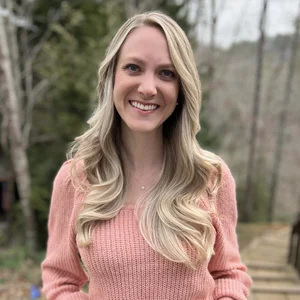
Jessica Thomas isn't just another health practitioner—she's a mama who's walked through the trenches of fertility struggles, unexpected C-sections, and formula feeding when breastfeeding didn't work out as planned. As a former high school biology teacher turned functional pediatric practitioner, she's helped over 400 families address the root causes of their children's health issues through gut health.
What I love most about Jessica is how she weaves faith into science. She reminds us that "God created us so specifically and intentionally that the science still has a long time to catch up." Amen to that!
From Teacher Burnout to Fertility Breakthrough
Jessica's story hit me right in the heart. After years of struggling with fertility while burning herself out as a teacher—not sleeping, not nourishing her body properly—she finally got pregnant only after leaving teaching and learning to honor the body God gave her.
"It was only until I finally left teaching and actually started honoring my body and listening to God in terms of feeding myself, getting better sleep, that I was finally able to get pregnant," Jessica shared.
Can you relate, mama? How often do we push our bodies to the limit, ignoring the gentle (and not-so-gentle) nudges from the Holy Spirit to slow down and care for ourselves?
Understanding Your Gut Microbiome: It's Not Just About You
Here's where things get fascinating. Jessica explained that our gut microbiome—that collection of bacteria, fungi, and other microorganisms living in our digestive system—doesn't just affect us. It directly impacts our babies during pregnancy, birth, and breastfeeding.
The mind-blowing part? The health of your gut microbiome during pregnancy is actually a reflection of years before. But don't panic if you're already pregnant! Jessica emphasizes there's still so much you can do to support your gut health right now.
The Key Players for Baby's Health
Jessica highlighted three crucial beneficial microbes to focus on during pregnancy:
Bifidobacterium (super important!)
Akkermansia
Faecalibacterium
These good bacteria can actually travel to and influence your baby during pregnancy, delivery, and through breastfeeding. When babies miss out on these key microbes, that's when we see issues like:
Eczema
Colic
Reflux
Food sensitivities and allergies
Digestive troubles
The Generational Impact That Made My Jaw Drop
Here's something that absolutely floored me: Jessica shared that with the increased use of formula over generations, if we're not actively ensuring our babies have these key beneficial microbes, they can actually be lost in three generations.
Y'all, this means the choices we make about our gut health today don't just affect our babies—they affect our grandbabies and great-grandbabies. Talk about leaving a legacy!
Real Talk: When Birth and Feeding Don't Go As Planned
This is where Jessica's story got really personal and gave me so much hope. She had not one but TWO C-sections (the second because her area lacks VBAC-friendly providers), and she struggled with breastfeeding both babies. Her milk didn't come in for three weeks with her first, likely due to the trauma of an unexpected C-section.
"I ended up doing some combo feeding for her, my first one, which was of course not ideal," Jessica shared vulnerably.
But here's the hope-filled part: Jessica has seen C-section babies with virtually no beneficial microbes turn around to having 80% beneficial microbes in their gut through targeted support. God has given us tools, mama!
Vaginal Seeding: A Tool for C-Section Mamas
If you're planning or might need a C-section, Jessica strongly recommends looking into vaginal seeding—where a swab from the vaginal canal is wiped on baby's face after delivery to transfer those beneficial microbes baby would have gotten during vaginal birth.
The key? Getting a vaginal microbiome test first to ensure you have the right bacteria to transfer (specifically looking for over 90% Lactobacillus crispatus).
The Elimination Diet Trap
Oh mama, this part spoke to my soul! As someone who's eliminated gluten and dairy due to inflammatory responses, I was fascinated to learn that long-term elimination diets can actually make things worse.
"The gut microbiome does best when you get diverse foods, and that's just the bottom line," Jessica explained.
She's seen how restrictive diets like low FODMAP, carnivore, or strict keto can lead to an overgrowth of opportunistic pathogens because we're not feeding those beneficial microbes the diverse, colorful foods they need.
The good news? Jessica has helped many mamas and babies reverse food sensitivities and conditions like cow's milk protein allergy by addressing the root cause in the gut.
Practical Steps You Can Take Today
Jessica's approach to change resonated with my mama heart—she gets that we can't overhaul everything overnight! Here are some gentle first steps:
Make swaps gradually: When you run out of a product, replace it with a better option (she recommends the Yuka app for scanning barcodes!)
Focus on nourishment, not restriction:
Eat enough food (so important postpartum!)
Include varied, colorful fruits and vegetables
Don't forget healthy fats
Add fermented foods when possible
Consider testing: Gut microbiome and vaginal microbiome tests can give you a roadmap for support
Address the emotional component: Jessica emphasizes that stress and trauma show up physically in our gut health—and there are concrete foods and supplements that can help build resilience!
📖 Scripture to Anchor You
"But I will restore you to health and heal your wounds,' declares the Lord..."
- Jeremiah 30:17
Mama, when you're dealing with chronic gut issues or watching your baby struggle with eczema, cling to this promise. God sees every sleepless night, every elimination diet, every worry about how your health affects your children.
Our God is a God of restoration. Sometimes healing comes through understanding His design (like learning about gut health). Sometimes through gradual rebuilding of our microbiome. And sometimes through grace to accept that even "imperfect" choices like C-sections or formula feeding can be redeemed for good.
Your journey to health is held by the Great Physician. Trust Him, take the next faithful step, and rest in His promise.
🙏 A Prayer for You on Your Journey
Precious mama, whether you're trying to conceive, currently pregnant, or navigating health challenges with your little ones, I want you to know that God sees you. He knows every concern weighing on your heart about your health and your baby's health.
Let's pray together:
Father God, we thank You for the intricate way You've designed our bodies. We're in awe of how You've connected mama and baby even at the microscopic level. Lord, for any mama reading this who feels overwhelmed by health challenges or guilty about past choices, would You pour out Your grace and hope? Show us the next gentle step forward. Give us wisdom to steward these bodies well, not from a place of fear but from a place of worship. We trust You with our health and our babies' health, knowing that You work all things together for good. In Jesus' name, Amen.
Remember, mama: God has given us amazing tools and knowledge to support our bodies, but He is our ultimate healer and provider. You don't have to be perfect—you just need to take the next faithful step.
📎Resources & Links Mentioned
✨ Christian Mama Birth Prep Library - Free birth prep tools, worship playlists & more
✝️ Online Christian Childbirth Education - Explore my complete birth preparation self-paced course including breastfeeding basics
💛 Work with Me 1:1 - Personalized pregnancy and birth support that integrates faith and evidence-based care, including virtual coaching, doula support, and comprehensive childbirth education
📱 Yuka App - for scanning products and finding healthier swaps
💚 Made Wholistic - Jessica's Instagram (@madewholistic)
📧 Contact Jessica: jessicathomas@madewholistic.com or book a consult here📣 Let’s Stay Connected
If this episode encouraged you:
Hit subscribe and leave a review on Apple Podcasts or Spotify.
Text a friend and share the show with a fellow mama.
Grab your free birth prep tools at the Christian Mama Birth Prep Library.

Meet Your Host —
Natalie is a certified birth doula and childbirth educator in Jacksonville, FL. She's trained through DONA International, certified as a Body Ready Method Pro, and an advanced VBAC doula. Through Faith Over Fear Birth, she equips Christian women to experience peaceful, faith-filled births through both virtual and in-person support.
🔗 More You Might Love
📄 Full Episode Transcript
Natalie: I am so excited to welcome Jessica Thomas to the podcast today. Jessica is a former high school biology teacher who's now a functional pediatric practitioner. With her background in biology and her certification as a nutritional therapy practitioner, she's helped over 400 families address things like eczema, food sensitivities, and digestive issues by getting to the root cause through gut health.
What I love about Jessica is that she combines hard science with real compassion. Her approach is both science-backed and trauma-informed. She primarily works with newborns and children, but also supports adults and those who are on their fertility journey. Jessica is also a mama herself of two little ones, so she really understands this intersection of faith, motherhood, and caring for our bodies.
Jessica, welcome to the podcast.
Jessica: Hey, thank you so much for having me. I'm so excited to be here and chat.
Natalie: Me too. I am so excited to get into gut health and just all the ways that it impacts our health and our baby's health. So, I know you're a mom of two, I just mentioned that, and you specialize in baby gut health. But how does being a mom shape the way that you approach your work?
Jessica: I have a huge story when it comes to this, so I actually really struggled with my own fertility. When I was a teacher, I was facing so much burnout and just like not sleeping, not taking care of myself. It was only until I finally left teaching and actually started honoring my body and listening to God in terms of feeding myself, getting better sleep, that I was finally able to get pregnant. So this is a huge part of my own work, and becoming a mom has shifted everything for me. It changed the way that I look at work. It changed the way that I look at all of the roles that I hold as a wife, you know, everything.
So I love being a mom. I love my family, and I know that a lot of moms also experience a huge shift when it comes to having kids. So I really take that into perspective when I practice now as a functional practitioner. Stress and becoming a mom and the process of delivery can often have a lot of trauma for many women, and it can involve a lot of change very, very quickly.
And these changes, even in your emotions, are so closely tied to your actual physical presentation. So something that I dive deep into in my practice is what depletion looks like on functional testing. So some tests that I run on moms and on kids include gut microbiome testing and mineral testing.
And often there are very specific markers on there that show up when moms are experiencing different types of trauma or huge transitions. And so taking that actual physical depletion, mineral depletion, gut microbiome issues, and using that to really inform the way that I'm working with people is a huge part of my practice now.
So yeah, your stress, your trauma, everything like that, even mine. So I went through so much with fertility and then having my two little ones who are still very little. My daughter's two and a half, and I just had a baby five months ago. So lots and lots in there for women, and it definitely shows up in my practice, and so that shapes the way that I work with people.
So not everyone is super open to lots of change all at once, and our bodies are definitely physically receptive to different types of things. So not every mom is open to revamping their entire diet or nutrition plan, and not every mom is open to doing supplements because it can be really hard. Taking things really gently, taking things slow, looking at baby, really addressing the emotional component because it plays a role in the physical too.
Natalie: Yeah, definitely. It is hard to make change, especially something as kind of an overhaul of taking care of yourself. I think our culture is overall getting better about this, but it does seem overwhelming, like the toxins that are in our environment and like our food sources and our cleaning products and our beauty products, like all of it can seem very overwhelming.
An approach that I've taken and I kind of advise others to do the same—I don't know if you would feel the same—but whenever you run out of something, like say it's a cleaner or a beauty product or food, you're just replacing it with a better option. I love the app Yuka, if you're familiar with that one, but it helps you scan the barcode and it will give you a list of all the ingredients and preservatives and different things. That's been really helpful for me too when I'm trying to make a swap for something and rather than feeling like, okay, I need to just throw out everything in my house and throw out everything in my fridge and pantry, you know, you can just slowly over time make those shifts.
But it is, it can be overwhelming, especially if you find yourself in the camp of like, oh, I really need to massively overhaul a ton of things about my lifestyle or like the things I'm eating. And yeah, it can be a lot, but for the mamas that have no idea even what we're talking about when we're talking about like gut microbiome, can you go into what that means and why does our gut health during this season of pregnancy or, you know, just being a mama, why does that matter so much for not only ourselves but for our babies too?
Jessica: Yeah, the gut microbiome is huge, and it's not just the gut microbiome. There's so many different microbiomes in our bodies. So basically the microbiome is a collection of living material inside of your body. So it can be bacteria, there can be fungal, like candida for example. There can be viruses, there can be lots of different components that make up the living material in your body.
Specifically when we look at the microbiome, we like to talk about bacteria, we talk about parasites, we talk about fungal things that can pop up. So when it comes to even what you were talking about before with toxins and all of the things in our environment, in our air, in our water, there's so many things that impact our gut microbiome and food and what we eat.
Our supplements, our prior health all make a huge difference on our gut microbiome. So just to get into it a little bit, the gut microbiome during pregnancy is super important, but your gut microbiome during pregnancy is actually a reflection of so many years before that. So you really want to be, regardless of where you are in your journey, whether you're in your trying to conceive phase or just recently pregnant, there are lots of things you can do to support your gut microbiome, and the reason why it's so important is because it directly plays a role for your baby and for generations in the future.
So what I'm talking about when I say that, when we look at the gut microbiome, there are a couple of key beneficial microbes that I like to look at, especially during pregnancy. Those include bifidobacterium, akkermansia, and faecalibacterium. But bifidobacterium is super, super important, and those specific types of microbes can travel and influence your baby. And your baby can get some of those good key microbes during pregnancy, during delivery, and through breastfeeding.
So you really want to be feeding those beneficial microbes. And the way that we do that is really to focus on good food intake. So eating enough. Eating varied, colorful fruits and vegetables. Eating fat—fat is super important—and really just focusing on nourishment overall. And of course those are super blanket statements, but we want to just, you know, every nutrition plan is so bio-individual that this can look very, very different from one person to the next.
So when I'm working with people during pregnancy, ideally what I'm looking at is taking two tests. One of them would be ideally the gut microbiome. The other would be the vaginal microbiome. And those both play a really significant role, especially if you're having a vaginal birth. But even if not, I find lots of great value, even if moms have to have a C-section. And we still take a culture of the vaginal microbiome because it's so reflective of the rest of the body, like the gut microbiome as well. It's helpful to get that information too.
So just to kind of like summarize, babies, your baby's gut microbiome and overall microbiome in general, not just the gut, but your baby's health is directly influenced by your gut microbiome, your vaginal microbiome, and your breast milk microbiome. Unfortunately, there are no tests for the breast milk microbiome as of now. Maybe in the future there will be, but most likely it's kind of like just a direct reflection of what's there in your gut.
And there are some really key, very specific strains that I make sure that moms have when I'm looking at their gut microbiome breakdown. I love, when it comes to tests, not all tests are created equal, but I love the tests that give me very, very detailed breakdowns of the microbes because then I can map them out to function and figure out how well those specific strains are supporting mom, even throughout pregnancy.
So I mean, for all of us that have had kids and have been pregnant know that digestive distress pops up, right? Like constipation. Some people get diarrhea closer to delivery. Yeah. So lots of things pop up, and this kind of testing is not just for your baby, it's also for you.
Couple of other things that I noticed. So UTIs in pregnancy, yeast infections, so sometimes increased hormones can mess with like fungal issues in the vaginal canal. All of those issues and also gestational diabetes, preeclampsia, all of the things that can pop up in pregnancy, there is often a connection to what I see in the gut microbiome too. So we can often support these things as well from the gut perspective and from food.
So with that, I always take into account all of the history. So if a mom, for example, has had years and years of antibiotics, we really want to try to get things under control and see, look at what the gut microbiome looks like because some of those more antibiotic-resistant bacteria can actually transfer. And we really definitely don't want that. That's when we see things pop up like eczema, colic, reflux, just digestive issues in general. Mom's feeling off postpartum.
You'd actually be, I could go into so much about this, but you'd actually be surprised how much your postpartum mood and how good you feel can come from mapping some of those key strains to the function. So one big part of that is actually short chain fatty acid production that I look at. So basically all that means is just looking at your neurotransmitter production. So are we producing GABA? Are we producing serotonin from the gut? So those are kind of like the big things. And yeah, so that's how it relates, how it affects your baby, how it affects you postpartum. There's of course, a lot more.
Natalie: It really is such a systematic approach to viewing your health instead of wanting to pinpoint certain issues like, oh, my baby has eczema. Oh, my baby has colic. Like instead of just focusing on one type of issue that you're noticing, but yeah, seeing it as like a full health approach. And then same with being in your pregnant body.
I've definitely struggled with gut issues like basically my whole life. And until I started kind of focusing on, you know, eliminating things that were inflammatory like gluten and dairy for me and just understanding, like, oh, this has far more reaching impacts on my health than just wanting to address the gut issues. Like I noticed when I eliminated gluten and dairy, my chronic headaches started going away. My joint pain started going away. And so it was like I was noticing all these other periphery things that were always constantly in my body that I didn't even realize I was having issues with until I started not having issues with them, if that makes sense.
I'd love for you to speak for a second...
Jessica: I get so many moms who have to do like elimination diets post having kids or post pregnancy. There is so much to unpack with that in terms of why. There is actually a very normal period of gut imbalance that happens post-pregnancy, and it's actually very biologically important, and I understand why God made it that way because it almost protects you from getting pregnant again too quickly. So it's super important for us to have that time period of rest after, because we really want to replenish all our minerals.
But going back to what you shared, so many moms on elimination diets now, especially while breastfeeding, and it is so hard, right? Like so many moms want to just eat and we're kind of like driven to eat postpartum because we need to replenish, and we come from like a not so great culture around like wanting to bounce back super quickly. But the elimination diet, it is so important in my opinion, if you feel like you have to eliminate foods like cow's milk protein allergy, huge one that moms are, I feel so many moms, the first thing that Facebook groups tell them to do is eliminate dairy and see how that helps.
But why, you know, why is the dairy the issue? Why is the gluten the issue? So if people have ever tolerated dairy in the past or if gluten has been tolerated in the past, I always like to dig really deep and usually we can figure out what's going on that's contributing to these food sensitivities. Especially for babies. There are four really key species that help to digest HMOs in breast milk, so I always want to check for those four for baby. But for mom, if we're like having a lot of issues with food sensitivities, I want to look at the function of the gut. We're looking at the gut barrier. We're looking at the gut lining. We're really giving mom the best chance at being able to eat.
So I've had lots of people turn around so many food sensitivities. I just recently, just even this week, had a mom turn around psoriasis and food sensitivities. I have babies all the time turn around cow's milk protein allergy. So those are some really, you know, even though the gut microbiome feels new, it's always been there, right? Like we are just now tuning into the magic of what God has created in our bodies. And I still firmly believe that the science is so far behind. Like there's, you know, God created us so specifically and intentionally that the science still has a long time to catch up, right?
Like, I love the way it aligns so well. But yeah, looking at those key strains is super important and not just the strains, right? I think a lot of practitioners also get really hung up on what's there and what's not there. Like, we want to see the terrain, we want to see what's influencing the gut microbiome, what's keeping you from, you know, adding some of these foods in. So really digging a lot deeper, and that's a big part of what I do.
Natalie: Yeah, I love that. I've been getting more into like microbiome and just how it affects everything. And just learning how having these elimination, like long-term things are not helpful because your microbiome needs a diverse exposure and feeding, like, you know, the microbiome. And so my hope is to one day be able to incorporate gluten and dairy back into my diet and not have this inflammatory response. But I know I have a long way to go.
Jessica: Yeah, just to talk about the elimination diets really quick. I know a lot of people love to talk about like carnivore, keto, being vegan, being vegetarian. The gut microbiome does best when you get diverse foods, and that's just the bottom line. The unfortunate reality is that even when I see people, I get people in my practice that have done low FODMAP for a month. Spices help with reducing your opportunistic pathogens, and I can always tell when someone's been on low FODMAP for a really long time because they have really high amounts of those opportunistic pathogens.
So, you know, any elimination diet, it shows up in your gut, right? And the unfortunate reality is people really love and are very pro keto sometimes. But sometimes when we look at the gut micro, it can, of course not everything fits for everyone. Some people can do really well, it can be really helpful for certain things, but when we eliminate colorful foods for a really long time, unfortunately, we're just not feeding those beneficial microbes.
So it's so important to get some variety. And if you're just not there, like if your body can't digest broccoli, for example, it's a great time to test and look at, see what's going on. Look at your digestive capacity. Testing on the market has significantly improved when it comes to those things. And yeah, it gives mamas and their children so much hope instead of feeling like I am forever not able to enjoy these certain food groups. Like I am so excited for the day whenever I can enjoy those things again. And so that just gives you a lot of hope.
Natalie: One thing that I wanted to point out about your story is that you had two C-sections and you formula fed your babies. So can we talk more about how to support the mamas that are having a cesarean birth, doing formula feeding where baby and themselves may not be having that ideal microbiome exposure or however you would phrase that. But can you talk more about that and what you're doing personally and what you recommend professionally?
Jessica: Yeah. So let's start with professionally, of course. Ideal is having a vaginal birth with as little interventions as possible and breastfeeding your babies for a long period of time. I always do my absolute best to encourage that. So whether that means working with a lactation consultant, an IBCLC for a longer period of time, working with a chiropractor for a longer period of time to get your baby more comfortable or you more comfortable, all of the things can be so helpful.
There's lots of support that a lot of moms haven't even tapped into, so I always, always prioritize that conversation. The HMOs, the key carbs in breast milk. There is no way to replicate that. Like there's no formula on the market can match breast milk. It is magical. It is incredible in the way that it feeds our babies' gut. So it is so important to try to get some of that, and every drop counts. Of course, if you're an under producer, it is still like anything you can get is still incredibly beneficial for your baby.
And like I said, well I was hinting at this earlier with the generation stuff, but there is actually, there are actually some studies that show that what, you know, with the increased use of formula over generations, if we are not actively like making sure that they have these key beneficial microbes, they can be actually lost in three generations. We don't want that. Those key bacteria are the ones that protect against eczema, food sensitivities, allergies, and you know how many kids we have now in our current timeframe where we have kids that are just allergic to so many things and it is so hard, right? Like they just don't have those key beneficial microbes.
So now relating this back to me, I had two C-sections. Definitely not ideal. Definitely not what I wanted. And that was really, really hard for me because postpartum I had to get over the fact that I had a C-section that I wasn't even thinking about. I hadn't even looked up anything about C-sections. So that was really hard for me. And then because of that, my milk didn't come in until three weeks later and I was really actively trying to get it to come in, but it was, I think that, you know, the trauma just played such a significant role for me in getting milk production to get going. And then by that point, it was very hard for her to latch. So I did pump for a while, but then it was just so rocky with all the stress and trauma that I was going through at the time. So I ended up doing some combo feeding for her, my first one, which was of course not ideal.
Formula is, and this is very timely actually because of the ByHeart recall that just happened, but formula is never going to be the same. And I think that this is so important to talk about. And I had a second C-section, but that's mostly because almost all the providers in my area are not VBAC friendly. So it would've been impossible for me to have one.
And then with the formula, going back to the formula, so formula is definitely not ideal but of course we have to feed our babies, right? Like if, you know, donor milk is a great option too. So that's something that's definitely worth exploring. But what I was going to say for moms that have to have C-sections or end up having a C-section that was unplanned, or if you have to formula feed your baby like I did, there are amazing tools now where we can really see what's going on.
Whereas in the past, people didn't really have, you know, these options. Gut microbiome testing, we can see these key strains that we'd normally get from breast milk. We can see them, we can get them back in some ways. I've had C-section babies turn around from no beneficial microbes to like 80% of the gut microbiome beneficial. These amazing tools that we have now are so, so helpful, and I'm so thankful that I am living in a time that I can have C-sections and have these tools, right? Because in the past we wouldn't have been able to see this. So God's given us some really amazing tools. So if you've ever had a C-section or if you've ever had to formula feed, it's a great reason to get some deeper testing and work with a functional provider. So thankful that these tools exist. I couldn't say that more.
Natalie: That's so cool. I wanted to talk about vaginal seeding with you. This is something that I am aware of but really personally have not done a ton of with my clients. Number one, because it's not as well known. A lot of providers are like, what? What do you want me to do? If you don't mind, can you share more about what vaginal seeding is and your professional thoughts on pursuing that as an option?
Jessica: Vaginal seeding is so powerful. So essentially, for those of you that aren't sure how it works, they take a swab of the vaginal canal and they kind of put it on baby's face in a couple of different key areas just after delivery so that baby can get some key strains from the vaginal microbiome that they'd normally miss out on if they were having a C-section. I think this is fantastic. I love it. I so promote it in my practice. I think it is a great, fantastic tool.
A couple things about that that I like to optimize. If you know you're going to have a C-section and you want to explore vaginal seeding, it is so important and I couldn't encourage you more to have a vaginal microbiome test. So what we're looking for on vaginal microbiome testing is to see that the vaginal microbiome is above 90% Lactobacillus crispatus. And the reason for that is because those are the key microbes that translate over into the bifidobacteria for babies. So there's a process that happens where those key microbes seed or provide the important microbes for baby's gut microbiome for digestion of breast milk, everything.
When we don't do seeding, we can get a lot of influence from the environment on the baby's gut microbiome. And when we use the word environment, it doesn't, it can be a good or a bad thing. So we get good beneficial microbes from skin to skin, which is so important. If we can get skin to skin after C-sections, that's a really great way to get good microbes. What's interesting is that dad's microbiome also plays a really significant role in C-sections. I think there's some research to show that it's almost 50%. So if we can get testing for dad and mom, like gut microbiome wise before, that's even better just because we know that baby's going to get more influence from the environment, but optimally what you do is just really optimize both mom and dad.
But yes, back to the vaginal seeding, we really want to get a vaginal microbiome test. If you've had any history of yeast issues, UTIs, BV, anything like that, super helpful to see what's going on. And I just want to add one more thing here, which is another important, I think, key to think about is that I've had lots of babies actually born vaginally that still miss out on those key microbes just because mom's health wasn't in a good spot before. So it's very upsetting when that happens, right? Because we've tried, you feel like you've done everything right, like you had the perfect home birth, you had the vaginal delivery, you're breastfeeding, and then we get testing back and it just doesn't show those key beneficial microbes and it really involves like looking back into your past, how often had we done antibiotics? Did we feed ourselves appropriately? You know, all the things.
And I don't want anyone to feel discouraged by this because there are so many things we can do. I have hundreds of tools that I use in my pocket and take out at any point for moms to support them. But it is super important to know that your health before really reflects what's going on with your baby, whether it's a C-section or a vaginal delivery. But I love vaginal seeding. I've seen great results in baby's gut microbiome from doing a process like that.
Natalie: Okay. If you are working with a mom whose provider is not familiar with vaginal seeding, is that something that mom could even do herself? Could she ask for like a gauze swab and place the swab in her vagina and then rub that on her baby's nose and mouth, like, kind of walk through that. If this is an approach that the mom kind of needs to spearhead and implement herself.
Jessica: Yeah, absolutely. So I've had moms do it themselves. I always recommend talking to a provider about it though, just in like if, because the best time to do it is right after you've delivered. So if you can get it at that point and talk to a provider, I have found that a lot of people, a lot of providers have heard of it before, whether they've done it or not. So if you kind of like give a little bit of a push for it as a mom, I think it could, it's really helpful. So the best time you can do it is like still when you're in the hospital. But I definitely think that I have had moms do it before themselves and it went totally fine.
Natalie: It's just helpful to know. I was just curious. Does a water birth change the microbiome for baby receiving the vaginal microbiome or skin microbiome? You know, due to like having a water birth. I'm just curious because I had a water birth with my last.
Jessica: Yeah, for the most part, I've had a couple of clients that have had water births. The microbiome looks very similar, so they are, you know, water on its own, those microbes will still exist. If you're jumping into a soapy tub or something like that is when you won't have as much of those beneficial microbes on the skin. But yeah, you want to definitely preserve your skin microbiome as well. If you have issues like eczema, psoriasis, any issues where your skin is kind of compromised, it's always a nice idea to, of course, get a gut microbiome test. But also just kind of like be aware that any skin that's compromised has a reduced ability to be an antimicrobial surface.
So essentially what happens on that type of skin is you can get more opportunistic pathogens. So being super aware of that, and I personally struggled with 20 years of eczema myself, so I really do empathize with everyone kind of like going through that. And pregnancy can be a really rough time with skin issues. If you're listening and you've ever dealt with like pregnancy acne, pregnancy eczema, it is so, so, so common and it is a reflection of our gut microbiome and our, you know, overall nutrition and health. So, yeah, just some things to think about, but usually water births are totally fine with the microbes. I've seen the gut microbiome looking pretty good post water birth.
Natalie: That's awesome. Yeah. I am actually one of those moms that through all of my pregnancies, my pregnancy acne and eczema flare up pretty bad. I'm already prone to acne, but the eczema always gets worse and that's actually what triggered my elimination diet with my last pregnancy, so about two years ago, was trying to do anything to reduce this eczema on my hands specifically. Like I would like scratch my skin off at night because it was so bad and I eliminated at the time eggs, gluten and dairy. So those three, and it did clear up. I was able to reintroduce eggs without flaring up the eczema. And then, like we kind of mentioned at the top, like wanting to eventually be able to incorporate everything back without having that flare up.
But yeah, it's so disheartening whenever your skin just has such a response to the pregnancy that's negative and then you're just like self-conscious too. Like, you know, it just is unsightly to, you know, I'm almost 33, like, you know, to be 33 and have acne all over your face. You're like, okay, shouldn't I be done with this? But yeah, it's hard.
Jessica: Yeah, so with the acne and any compromised skin, of course the changes in the shifts in your hormones will continue to impact that. So I get terrible eczema during pregnancy and I know that it's related to my hormones and they actually, it actually gets so much worse postpartum until things calm down. Like until I get back into a little bit of a rhythm, whether that means getting my cycle back or just getting into a little bit of a rhythm with pumping, that's when things start to get a little bit better for me.
So again, lots of great tools that we can put under. And what I was going to add to what you shared is that there are, and I've worked with lots of pregnant moms, so there are some really, really good, non-toxic skin products, homeopathy, herbal supports that we can use. But it really does take a provider that's super aware of the ones that are safe in pregnancy. So you want to be very, very careful about what you use. Just because it's a supplement doesn't make it safe. Just because it's a supplement doesn't mean that you can overdo it as well. So you want to be really careful around those things.
Natalie: Yeah, and something else, I'm sorry, I'm just like randomly coming up with things that are coming to mind, but I had a friend who, when she breastfed, her body would actually like break out in a rash every time she breastfed. Is that also something that's tied to microbiome? Is that a hormonal thing? I found that so fascinating that her body was almost like allergic to breastfeeding. I had never seen that before.
Jessica: I've definitely worked with clients that have had that. There are a couple of things can be at play. So one thing is just overall depletion when mineral levels are low. And moms are experiencing a lot of the stress and depletion that comes with breastfeeding. We can just get like overreactivity. Another thing is if mom has had prior history of histamine issues, so that can really, especially when there's something like, you know, going on, or you know, more difficult, like breastfeeding that takes more calories on your body because you have to, you know, we're always producing milk, so histamine issues can be at play too.
And sometimes it is a really big emotional component. So there are, like I said, we, whenever I say emotional component or stress or trauma, I mean actually directly, physically. So a lot of moms, when they see providers, they say, you know, like reduce your stress or find ways to work on your trauma. And that's so elusive. Like so many moms get so lost in that. But there are actually concrete foods that you can increase to help with your resilience. There are concrete supplements you can take to help with your resilience. We're not into the abyss. God has given us so many really fantastic tools to actually do that work.
And there are some really, like I said, really great pregnancy-safe things that you can do to calm your body down before breastfeeding. Lots of breathing techniques you can do, foods you can boost even with histamine issues, and histamines can be so tough for people. Like high histamine foods or even like sensitivity to outside allergens, like environmental issues, especially in pregnancy, those can be heightened and especially in breastfeeding, lots of great foods you can increase. For example, pea shoots have a lot of DAO enzymes, so you can boost some of those as a way to kind of help to break down those histamines. But lots of great targeted supports we can put into practice with those.
Natalie: That's amazing. I'm kind of going off script here because I had questions for you, but like, I just like keep getting excited about all the things that we're talking about. So what does it look like to work with you? Because I know that you're primarily working with babies and children but you also have like specific adult populations, I'm assuming pregnant women. What does it look like to work with you? Is it a one-on-one thing? Do you have group programs? Because I personally am interested and I am sure that there are so many other women that are interested in how they can kind of address these very individualized issues in their body. Because like you're saying, it is not a one size fits all. And being able to hone in on your specific microbiome or your specific symptoms can be so, so dramatically life changing.
Jessica: I've seen so many transformative effects from people after they've worked with me for like a couple months. Even as short for babies. You'd be so surprised how much transformation can happen, even as little as four to five weeks. So working with me and in terms of what that looks like, so I have different offerings.
My best, most transformative offering is working with me for like a three-month time period and taking things step by step, like really rolling back different layers of your health. I am actually not a huge fan of group programs because I can't really, I put so much time and effort and intentionality. Nothing is ever the same for two people, so it really is, in my opinion, even more valuable to work one-on-one. So working with me in terms of that, I have, and I can share with you after that, you can feel free to include, I have a calendar booking link where I can talk to anyone. I talk to anyone for free.
I often give some additional support and things to think about during that free chat. And then we can chat about like some different ways depending on your financial situation. I always cater to different people's financial situations, so that is totally up to you. And then testing, I always encourage like some type of test so we can get a little bit of an idea of what's going on. And of course, if you can't afford testing, I'm still happy to work with you. But yeah, the most transformative offering I have is working a couple months at once, but I do of course offer single sessions as well. And most of my work is virtual. So I'm happy to work with you if you're in the US or even if you're in a different country. I do take on international clients as well. If you're in Tampa, so I'm from Tampa. If you're in Tampa and you are looking for an in-person provider, I do home visits. So I'd love to meet you if you're in Tampa.
Natalie: Awesome. Do you know if like insurance can help in any capacity or like if you can pay for services with like an HSA/FSA?
Jessica: Yeah, so I will be taking HSA and FSA next year, so I don't currently take that right now. Everything is self-pay. If you follow along, I post updates about my business all the time on my Instagram at Made Holistic. I will definitely update and you can also get on my email list. I'll put an update in there. But as of now, everything is self-pay, but you can pay for testing with HSA and FSA. So if you're interested in that, you can definitely reach out to me and I can help you with that.
Natalie: Wonderful. So yeah, if someone wants to get in contact with you, possibly work with you, what are the best avenues to do that?
Jessica: I'm going to leave you with a number that people can text. I'll send that to you after, and then you can always email me, jessicaThomas@madeholistic.com, or you can follow me on Instagram at Made Holistic. Those are the best ways to reach out to me.
Natalie: Well, thank you so much, Jessica, for just sharing your wisdom and your knowledge. This was such a helpful conversation for me. But I know it's going to impact a lot of other mamas because this is a really exciting realm of viewing health and viewing the health of not only our pregnancies for the sake of ourselves, but for the sake of our babies and their long-term health. So I appreciate you coming on and sharing this.
Jessica: Thank you so much for having me. I loved it. It was so nice to meet you.